
Payette County Criminal Records
A Payette County criminal court record begins when a criminal case is filed in court. It can include the charging document, case number, defendant name, case type, court location, judge or magistrate, hearing entries, motions, orders, pleas, disposition, sentence, fines, restitution, bond information, and probation entries. The court record is maintained through the court and clerk channels, not by a private background-check site.
The District Court handles felony trials in Payette County. The Magistrate Division handles misdemeanors, felony preliminary hearings, traffic and infractions, and first-stage matters that may later move forward in District Court. Filed charges and their case outcomes belong in the criminal court record. Arrest reports and booking details are sheriff or jail records, and a closer explanation of charges after arrest belongs with Payette County arrest records and court charges.
Search Payette County Criminal Cases
Use iCourt Smart Search to look for public Payette County criminal court records by case number or defendant name. Advanced filters can narrow results by location, case type, case status, filing dates, or judicial officer. Search Hearings can help when the goal is the next court date rather than the full case index.
- Open the Idaho iCourt Portal and choose Smart Search.
- Enter the case number or the defendant's legal name in the required format.
- Use advanced filters to select Payette County and a criminal case type when needed.
- Open the public case result and review events, hearings, charges, pleas, and disposition fields.
- Request certified copies from the Payette County Clerk / Auditor / Recorder if an official document is needed.
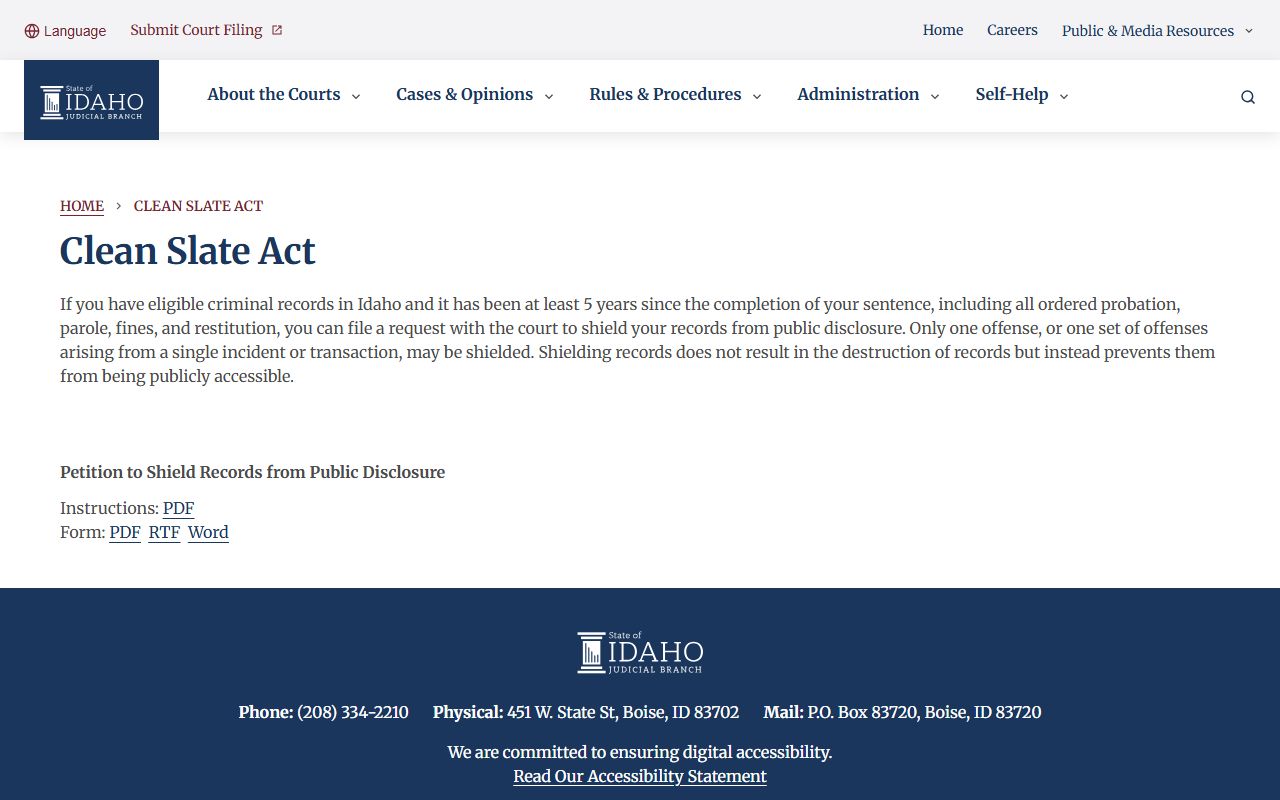
The Idaho Clean Slate Act page is one official source for understanding when an eligible Payette County criminal court record may be shielded from public disclosure.
Payette County Criminal Case Flow
Criminal court records are easiest to read when the stage is clear. A case may begin with a complaint, information, indictment, or citation, depending on the offense and process. The defendant may have an arraignment, pretrial hearings, motions, plea negotiations, trial settings, a plea or verdict, disposition, and sentencing. Some cases end with dismissal, amendment, or reduction rather than conviction.
Case flow: Charges Filed › Arraignment › Pretrial / Motions › Plea or Trial › Disposition › Sentencing
| Stage | What Happens |
|---|---|
| Charges Filed | The prosecutor or authorized charging process places formal accusations into the court record. |
| Arraignment | The defendant is formally advised of the charge and enters a plea. |
| Pretrial / Motions | Parties file requests, notices, and orders that may shape trial, plea, or dismissal. |
| Plea or Trial | The case is resolved by plea, verdict, acquittal, dismissal, or other court action. |
| Sentencing | The court imposes jail, prison, probation, fines, restitution, or other terms after conviction. |
Payette County Criminal Record Fields
A public Payette County criminal court record may show enough information to identify the case and understand the outcome, but not every document or confidential detail. Idaho e-filing and redaction rules require care with personal identifiers, crime-victim information, medical records, financial information, and other sensitive content. Public results should be treated as an index and event history unless the actual court document is viewed or obtained.
| Field | What It Shows |
|---|---|
| Case Number | The court file number used for search, payment, and copy requests. |
| Defendant | The person charged in the criminal case, subject to public-access limits. |
| Charges | The filed offense names, statutes, counts, severity levels, and current status where public. |
| Hearings | Arraignment, preliminary hearing, pretrial, trial, review, sentencing, or other settings. |
| Plea | The defendant's formal response, such as guilty, not guilty, or other plea entry. |
| Disposition | The result of each charge, such as conviction, dismissal, amendment, or acquittal. |
| Sentence | Jail, prison, probation, fines, restitution, or other terms imposed after conviction. |
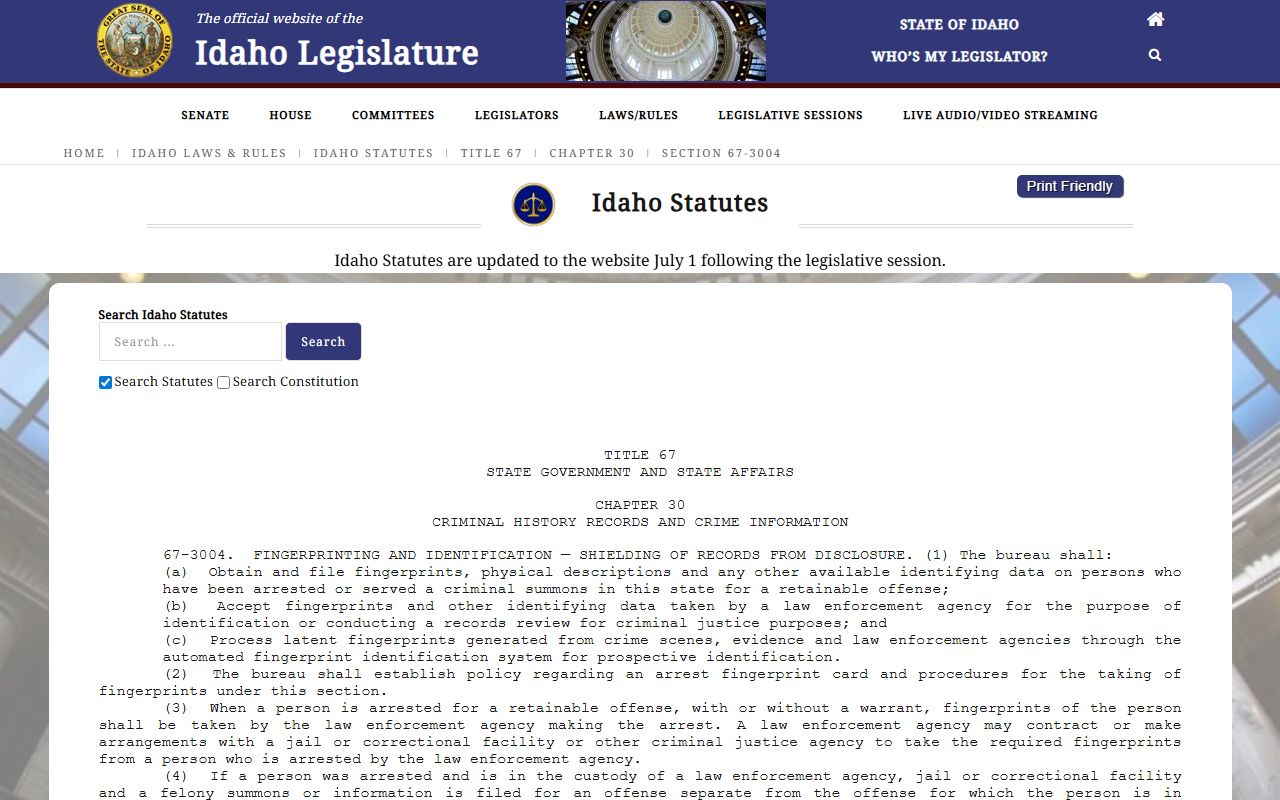
The criminal-history shielding statute is one official source for Payette County criminal court records that may no longer be disclosed to the public.
Charges vs Convictions
A charge is an accusation filed in court. A conviction is a final outcome based on a guilty plea, guilty verdict, or other conviction entry. Payette County criminal court records can show charges that were dismissed, reduced, amended, or resolved without conviction. This is why the disposition field matters more than the mere presence of a charge.
| Feature | Charge | Conviction |
|---|---|---|
| Meaning | Formal accusation in a criminal case | Final finding or plea resulting in guilt |
| Timing | Appears early or mid-case | Appears after plea, verdict, or judgment |
| Record Effect | May be pending, amended, or dismissed | Can lead to sentence, fines, restitution, or probation |
| Best Field | Charge list and status | Disposition and sentence |
Payette County Prosecutor Role
The Payette County Prosecuting Attorney is Mike Duke. The office handles all criminal cases in District Court and misdemeanors outside city limits or cited by Idaho State Police or Fish and Game. The county states that misdemeanors within Fruitland city limits are the exception and questions about those matters go to Fruitland City Prosecutor Paul Fitzer.
That jurisdiction note helps explain why a criminal court records search may need more than one source. The court case is searched through iCourt and the clerk. Police reports may sit with the sheriff, Payette city police, or Fruitland police. Filed charges reflect prosecutor action and court filing, while custody status or booking information belongs to jail and inmate channels.
The prosecutor page also matters for reading misdemeanor records. A misdemeanor outside city limits, or one cited by Idaho State Police or Fish and Game, can follow the county prosecutor path. A Fruitland city misdemeanor may not. When a name search finds no Payette County criminal case, the next check may be the correct city records channel, not a broad third-party search.
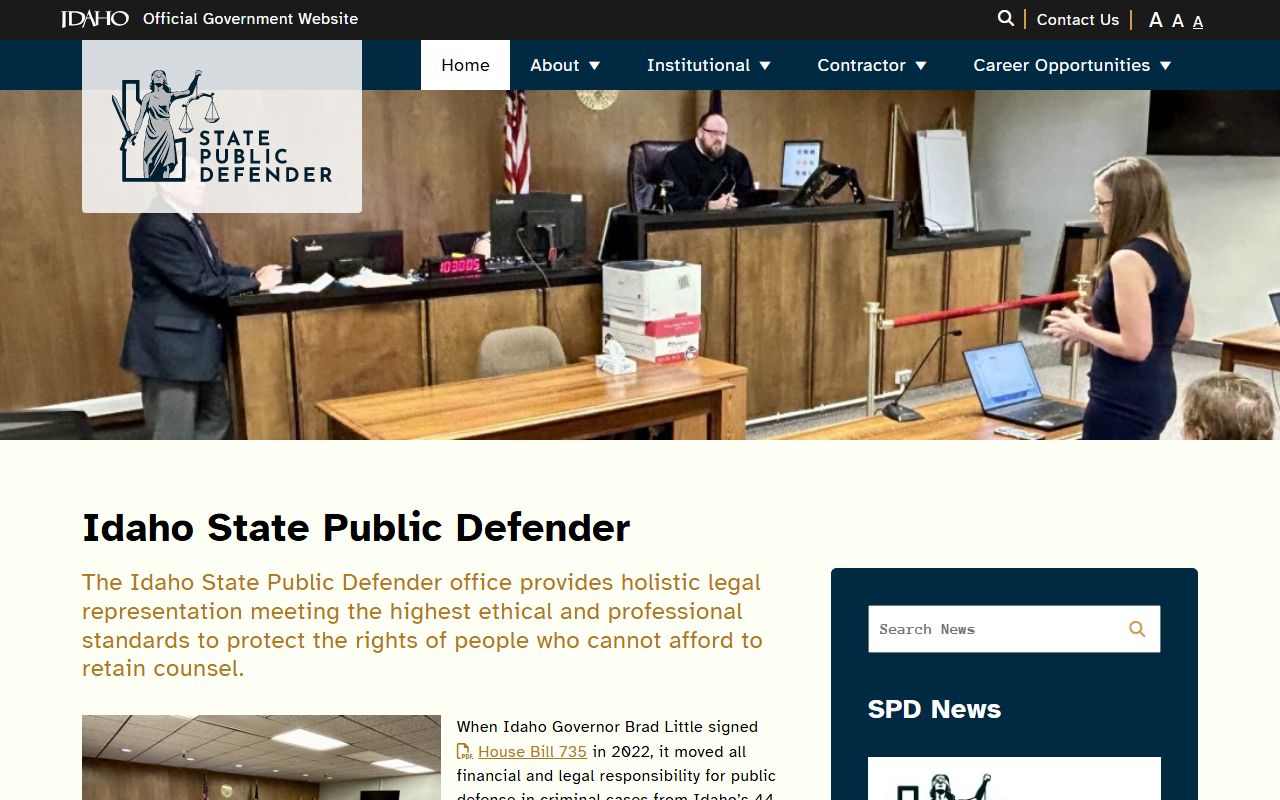
The Idaho State Public Defender is the statewide public-defense structure source for Payette County criminal matters.
Sealed vs Expunged Records
Idaho records language should be read carefully. Sealed records are hidden from public inspection by rule or order. Shielded Clean Slate records are removed from public disclosure but remain available to courts, law enforcement, prosecutors, and the defendant in authorized contexts. Expungement applies under specific statutes, including separate juvenile expungement rules. These terms do not all mean the record was destroyed.
| Feature | Sealed or Shielded | Expunged |
|---|---|---|
| Public View | Hidden or removed from public disclosure | Restricted under a specific expungement law |
| Record Status | Record still exists for authorized users | Effect depends on the statute and order |
| Idaho Source | ICAR 32 and Clean Slate materials | Juvenile and other statutory processes |
| Payette Filing | Filed in the court with the case when relief is sought | Requires statute-specific eligibility and process |
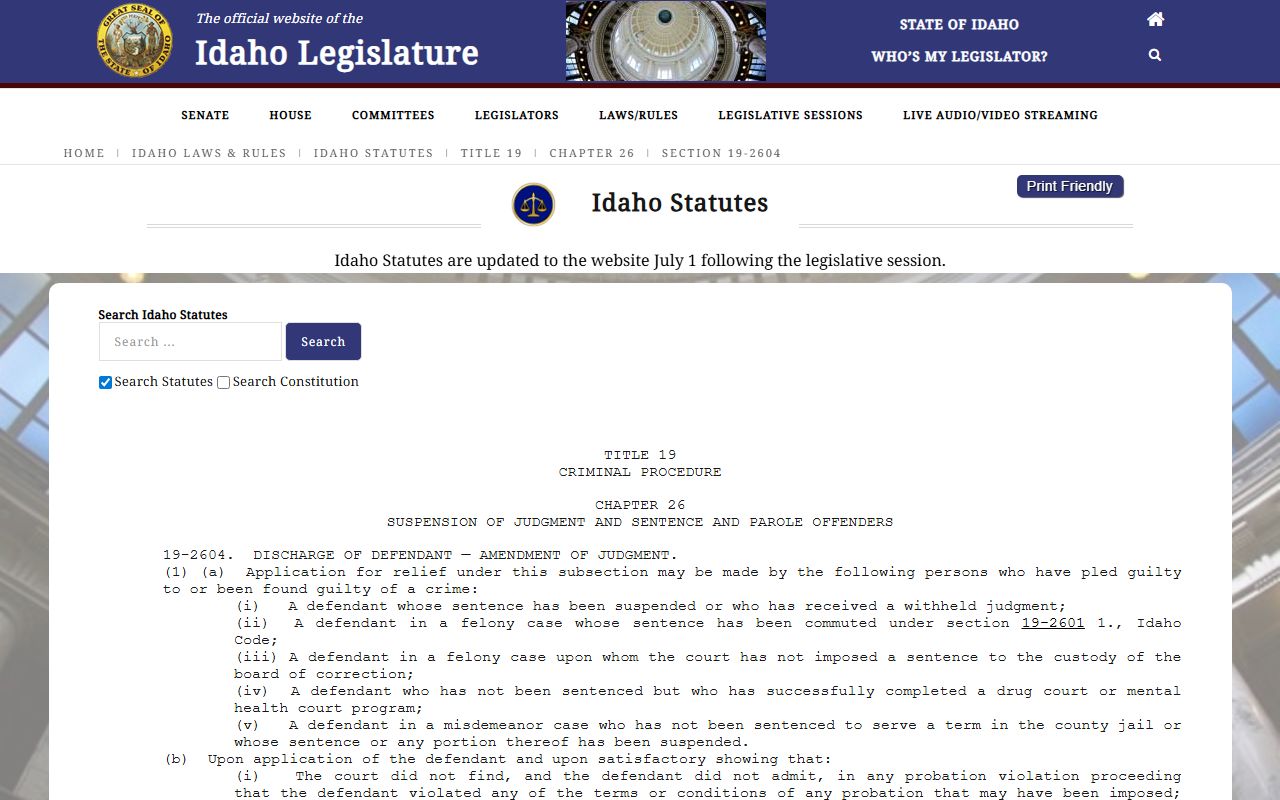
The official dismissal, set-aside, and amendment statute is relevant to some Payette County criminal court records after sentence conditions are met.
Payette Criminal Record Access
Public access to Payette County criminal court records is governed by Idaho public-records law and court-specific access rules. Idaho Code Section 74-102 presumes public records are open unless a statute provides otherwise. ICAR 32 controls judicial department records and explains sealed, exempt, redacted, and shielded court records.
Idaho Code Section 67-3004 covers criminal-history records and shielding. Idaho Code Section 19-2604 covers certain dismissal, set-aside, or felony-to-misdemeanor amendment relief. Juvenile matters have separate limits and can be expunged under Idaho Code Section 20-525A.
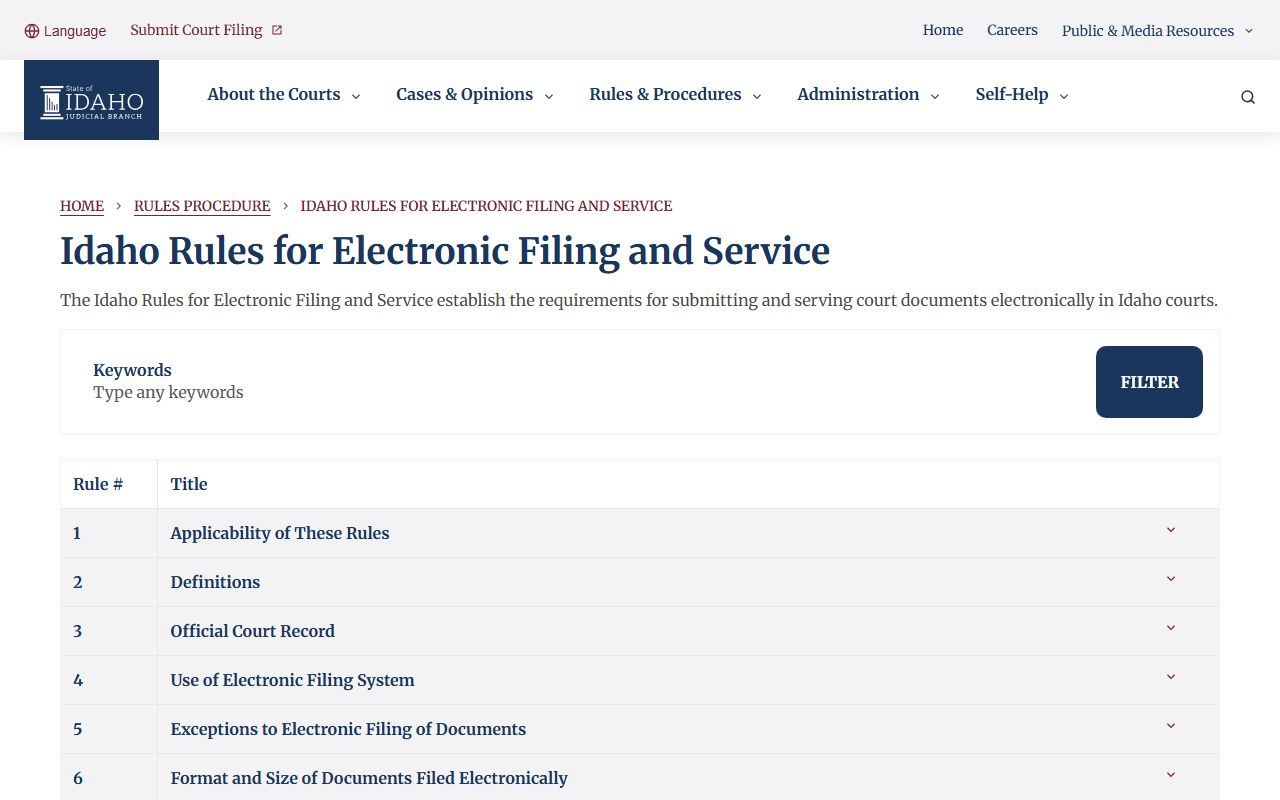
Idaho e-filing and redaction rules guide how sensitive data is protected in Payette County criminal court records.
Restricted Payette Criminal Records
Juvenile cases, sealed cases, shielded cases, unreturned warrants, certain victim information, personal identifiers, and confidential treatment or medical material may be restricted. Idaho court rules also exempt specified records supporting search or arrest warrants before return, with special treatment for bench warrants. A public docket gap does not prove that no Payette County criminal case or law-enforcement record exists.
For official copies, contact the Payette County Clerk / Auditor / Recorder. For arrest reports, citations, complaints, and dispositions generated by the sheriff, use the sheriff Records Division. For current custody, use VINE, jail inmate records, or IDOC only when the person is under the state system rather than the county jail.
Payette County jail planning materials also explain why custody status can change fast after a criminal filing. The research notes cite-and-release during capacity pressure, weekday arraignment timing, and short stays for many people. Those facts make the criminal court record the steadier source for charges and disposition, while custody systems answer only whether a person is held or supervised at a given point.
Note: A Payette County criminal charge should be read with the disposition before treating it as a conviction.